As social media evolves into AI-powered experiences, businesses keep investing in digital tools to stay connected with customers. Yet, even in this age of automation, the voice call remains the simplest and most trusted form of communication. When customers reach out, they expect to hear a human voice; one that conveys empathy and authenticity.
A toll-free number bridges that gap between convenience and connection, allowing customers to reach a business without worrying about call costs: creating a frictionless, customer-friendly experience that builds trust.
Today, toll-free numbers have evolved, and calls are now routed through cloud-based systems that connect teams across regions, turning traditional phone lines into scalable digital assets. Customers increasingly expect companies to offer free, reliable voice support as part of their overall customer experience.
In this guide, we’ll explore how to set up your toll-free number from scratch, understand how it works behind the scenes, and see how VoIP providers like Telvoip help Kenyan businesses integrate toll-free systems into their broader support and marketing strategy.

How Toll-Free Numbers Work Behind the Scenes
Toll-free numbers are often misunderstood, so it’s important to clarify how they actually work. A toll-free number acts as a virtual gateway that connects customers to a business through specialized telecom routing.
Unlike standard phone lines, the caller isn’t charged: instead, the business absorbs the cost to create an open, customer-friendly communication channel. Beneath that simplicity lies a complex network of carriers, service providers, and routing systems working together to deliver each call smoothly and reliably.
When someone dials a business’s toll-free number, the call flows through several key components:
- Carrier: The telecom company that maintains the underlying phone network infrastructure and assigns toll-free prefixes (like 800 or 888).
- Service provider: The intermediary platform that manages your toll-free service. It controls routing, call forwarding, interactive menus (IVR), and additional features like recording or SMS capability.
- Business owner: The recipient of the call, which can be routed to one or multiple numbers, offices, or contact centers.
The process works like this:
- A customer dials your toll-free number.
- The carrier detects that it’s toll-free and identifies your service provider.
- The call is then routed based on your customized setup; either to a sales team, customer support queue, or voicemail.
Many toll-free systems use call forwarding to direct calls from one location to another. For example, from a national number to regional offices or remote agents. IVR (Interactive Voice Response) technology further enhances the experience by allowing customers to navigate through a simple menu (“Press 1 for billing, Press 2 for support”), ensuring calls are efficiently directed to the right team.
The result is a seamless, customer-first experience where your business appears always reachable, regardless of time or geography.

Picking the Right Number Type: Your Business Identity Starts Here
Toll-free numbers come in different configurations, and choosing the right one is a strategic branding decision that can impact customer recall, trust, and overall business perception.
Beyond functionality, your number often serves as a first impression of your business, bridging your identity and accessibility.
- Vanity Numbers: Memorability Meets Marketing
A vanity number uses a sequence of digits that spell out a memorable word or brand name, such as 1-800-FLOWERS or 1-800-CONTACTS. These numbers are ideal marketing tools because they are easy to recall. Studies show that consumers are more likely to remember and dial a word-based number they’ve seen in advertisements or billboards.
Vanity numbers strengthen brand identity, improve ad recall, and often deliver higher conversion rates from marketing campaigns. When paired with online or offline advertising, they help unify your brand across channels.
- Local Toll-Free Blends
Some businesses prefer a more localized approach, which combines toll-free routing with geographic area codes, providing the familiarity of a local presence while still offering free calls.
This is ideal for service providers or small businesses that want to build trust in specific regions.
- Shared vs. Dedicated Lines
New or small businesses sometimes opt for shared toll-free lines, where multiple companies use the same main number with unique extensions. This approach reduces cost but limits customization. Established companies, on the other hand, should invest in dedicated lines to maintain full control over branding, routing, and analytics.
- Global Reach: ITFS vs. UIFN
For international businesses, ITFS (International Toll-Free Service) and UIFN (Universal International Freephone Numbers) are key options.
- ITFS provides a separate toll-free number for each country.
- UIFN offers a single number (prefixed with +800) accessible across multiple countries.
UIFN simplifies management for multinational organizations, while ITFS can tailor the experience per country; including local language greetings or region-specific routing.
- Common Mistakes to Avoid
- Choosing long or random number sequences that customers can’t remember.
- Failing to check number availability before toll-free branding materials are printed.
- Ignoring global toll-free setup accessibility when targeting international customers.

Step-by-Step: How to Set Up a Toll-Free Number
Setting up a toll-free number is straightforward, but doing it right requires thoughtful planning. Here’s a step-by-step breakdown.
1. Define Your Business Needs
Start by identifying why you need the toll-free number.
- Are you setting it up for sales, support, or marketing campaigns?
- What’s your expected call volume?
- Do you operate locally, regionally, or globally?
Your answers will determine the provider, features, and pricing plan that best fit your needs. For instance, a real estate agency may only require basic call forwarding, while a high-volume call center handling thousands of inquiries daily will need advanced routing, IVR, and analytics to optimize response times and enhance customer support efficiency.
2. Choose a Toll-Free Service Provider
Your choice of provider determines your service reliability and flexibility. Evaluate vendors based on:
- Reliability: Look for VoIP providers in Kenya with high uptime guarantees (99.9% or above).
- Scalability: Ensure the system can handle future growth or seasonal spikes.
- Integration capabilities: Ensure the provider is compatible with CRM tools, call-tracking software, and analytics dashboards. Platforms like Telvoip offer seamless CRM integration along with AI-powered call tracking, intelligent routing, and comprehensive analytics; all accessible from a single, unified dashboard.
- Pricing transparency: Avoid hidden charges, and compare usage rates.
Furthermore, cloud-based call center providers like Telvoip also outperform traditional carriers due to faster setup, better API support, and simplified billing.
3. Select Your Toll-Free Prefix and Number
Next, choose an available prefix and toll-free number that aligns with your target market. In Kenya and across much of Africa, 0800 remains the most common toll-free prefix, managed under local telecom regulations such as the Communications Authority of Kenya (CAK). Some countries may also use 0700-series or 080X variations, depending on national numbering frameworks.
If you’re considering a vanity number, pick a simple, memorable word that reinforces your brand identity; for example, 0800-DRYCLEAN for a laundry service or 0800-YOGUPAY for a fintech company. Keep it short, relevant, and easy to spell; complex or forced combinations can confuse callers and dilute recall.
4. Configure Call Routing and Forwarding
Proper call routing ensures a smooth caller experience. Consider:
- Time-based routing: Forward calls differently during business hours versus after-hours.
- Departmental routing: Direct sales calls to sales teams, technical inquiries to support staff, and billing questions to accounting.
- IVR menus: Set up guided options to reduce misrouted calls.
- Redundancy: Implement backup numbers to ensure no call is ever missed, even during outages.
Well-structured routing not only improves efficiency, but also enhances brands image by projecting professionalism and responsiveness.
5. Integrate With Your Communication Systems
Integration is where your toll-free number becomes part of a larger ecosystem. Link it to your VoIP systems, CRM, or call center software so that every customer interaction is tracked and logged.
APIs from VoIP providers like Telvoip can automate data syncing between systems; ensuring agents have caller histories and context before picking up. Integration with platforms like HubSpot, Salesforce, or Zendesk allows you to tie call outcomes such as; sales, support tickets, and lead conversions directly to campaigns.
6. Test Your Number
Before going live, conduct comprehensive testing:
- Check call clarity and latency.
- Confirm routing accuracy for every menu option.
- Test different devices and networks.
- Simulate high-traffic scenarios to assess call queue handling.
A simple misconfiguration could cost leads or damage credibility, so it’s worth testing thoroughly.
With UC platforms like Telvoip, Kenyan businesses receive guided onboarding and testing support from real-time call flow simulations to quality checks across all routes. This ensures every toll-free connection is seamless before launch, minimizing downtime and maximizing customer confidence.
7. Launch and Monitor Performance
Once live, track and optimize performance regularly.
Key metrics include:
- Inbound call volume
- Missed and dropped calls
- Average call duration
- Conversion and resolution rates
Reputable VoIP Providers often include analytics dashboards for these insights, allowing you to identify trends and optimize campaigns. Furthermore, call monitoring, recording and automated routing can help you identify call patterns and distribute inquiries efficiently based on time, location, or agent availability.
This not only improves response times but also enhances the overall customer experience by ensuring callers reach the right department the first time.

Cost Breakdown: What to Expect When Setting Up a Toll-Free Number
Costs depend on provider, usage, and features. Here’s what to anticipate.
Setup vs. Recurring Costs
Most toll-free plan providers charge a one-time setup or activation fee typically $5–$20 plus a monthly maintenance fee between $10 and $30. The real cost driver is usage, particularly the number of minutes your customers call.
Pay-Per-Minute vs. Bundled Plans
- Pay-per-minute: Great for small businesses or low call volumes. Rates range between $0.03–$0.10/minute.
- Bundled plans: Offer fixed monthly packages with a set number of minutes, ideal for predictable traffic.
Add-On Features
Enhance functionality with:
- Call recording and analytics for training and compliance.
- SMS-enabled numbers for dual voice/text engagement.
- IVR systems for automated call management.
- CRM integration for unified reporting.
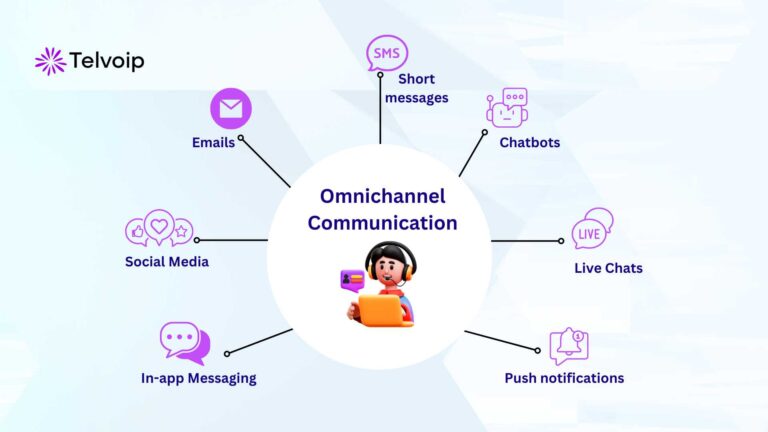
Today, many Smart-VoIP providers are evolving toward omnichannel communication, offering all these tools in one system. Platforms like Telvoip integrate voice, SMS, email, and WhatsApp into a single dashboard, ensuring teams never miss a message; no matter the channel.
This unified setup enables businesses to manage interactions seamlessly, track customer journeys across multiple touchpoints, and maintain consistent engagement without switching between systems. It’s a clear demonstration of how strong customer experience (CX) serves as both a support and growth engine; driving retention, loyalty, and lasting brand trust.
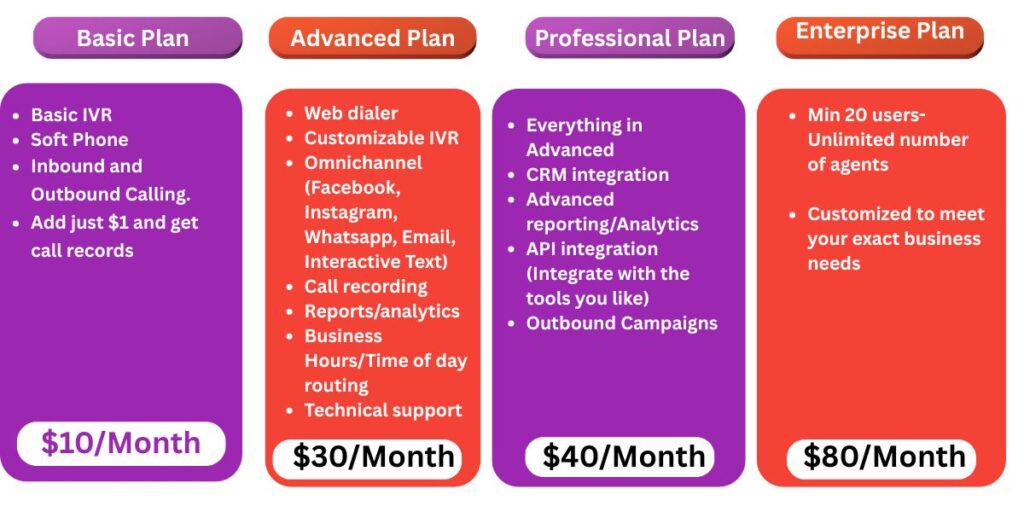
Example Pricing Tiers
Integrating Toll-Free Numbers into Your Omnichannel Strategy
In today’s digital communication ecosystem, a toll-free number acts as a strategic touchpoint that enhances every stage of the customer journey. Below are a few ways to integrate toll-free numbers into your omnichannel strategy; ensuring you meet customers wherever they choose to connect.
- Integrate Across Marketing Channels
Embed your number into:
- Social ads: Add “Call Now” CTAs for direct conversions.
- Websites and mobile landing pages: Use click-to-call buttons for instant engagement.
- SMS campaigns: Combine toll-free replies with promotional texts.
- WhatsApp and chat: Let customers escalate complex queries to a phone call.
- Connect With CRM and Marketing Tools
Use toll-free APIs to synchronize caller data with customer engagement tools like Salesforce, HubSpot, or Zoho. This creates a 360° customer view, allowing you to track how each interaction contributes to revenue or retention.
- Build Unified Customer Journeys
When combined with digital campaigns, toll-free integration bridges the gap between online curiosity and human connection; a powerful differentiator in competitive markets.

Common Pitfalls During Setup and How to Avoid Them
Even well-planned toll-free setups can run into issues. Here are common mistakes and how to prevent them:
- Failing to register the number legally: Numbers can be reassigned if ownership isn’t verified. Always register under your business name.
- Neglecting analytics: Without tracking, you can’t measure ROI or call outcomes.
- Lack of after-hours routing: Missed calls outside working hours can hurt conversions.
- Poor-quality providers: Low-tier UC providers may offer cheap rates but result in dropped calls or audio delays.
Quick Fix Checklist:
- Verify ownership and register your number.
- Set up call forwarding after hours.
- Monitor call analytics regularly.
- Test call quality monthly.
Businesses can avoid these pitfalls by partnering with reputable omnichannel communication providers like Telvoip, whose fool-proof systems scale seamlessly. Such VoIP providers ensure full compliance in toll-free number acquisition, integrate analytics and AI-powered monitoring for smarter insights, and offer advanced call-routing features to support multiple campaigns effortlessly.
Regulatory and Compliance Essentials You Can’t Skip
Compliance protects both your business and your customers. While regulations vary by region, core requirements include:
- Telecom Authority Oversight: The Federal Communications Commission (FCC) in the United States, the Office of Communications (Ofcom) in the United Kingdom, and the Communications Authority of Kenya (CAK) oversee numbering systems and protect consumer rights.
- KYC Requirements: Businesses must provide registration documents before number activation.
- Privacy Rules: Ensure consent for call recording in compliance with laws such as the General Data Protection Regulation (GDPR), the California Consumer Privacy Act (CCPA), and local frameworks like the Kenya Data Protection Act.
- Cross-Border Restrictions: Confirm toll-free compliance with local laws when receiving international calls.
Staying compliant not only avoids penalties but also enhances customer trust.

Measuring ROI: Turning Toll-Free Calls into Business Insights
Once your toll-free system is active, it becomes a valuable data source.
- Tracking Performance
Integrate call analytics with Google Analytics, CRM systems, or marketing dashboards to understand where calls originate and how they convert. You can attribute leads to ads, pages, or campaigns based on call activity.
- Key Metrics to Monitor
Looking at the economics of customer experience (CX), optimizing these key metrics and interactions turns every toll-free call into a measurable business advantage.
- Total calls received and answered
- Missed call rate
- Average handling time
- Conversion percentage
- Repeat caller ratio
For example, a fintech company uses a toll-free number for its remittance campaign. After linking it to CRM analytics, the company discovers that inbound callers convert 2.5× higher than website leads. This insight leads to reallocating ad spend toward phone-based CTAs; driving both revenue and customer satisfaction.
How AI Routing is Transforming Toll-Free Communication
Toll-free communication is entering a new era driven by cloud telephony, AI, and automation. What began as a simple phone service is evolving into a data-rich, intelligent platform.
AI-Powered IVR and Predictive Routing
Modern systems use AI to understand natural speech and intent, routing calls intelligently based on caller needs. Instead of pressing numbers, customers can say, “I’d like to speak to billing,” and the system responds instantly.
Real-Time Translation and Sentiment Analysis
AI tools can detect tone and language, automatically assigning bilingual agents or adjusting scripts; improving customer satisfaction and reducing response time.
Toll-Free APIs and Smart Contact Centers
API-driven toll-free numbers can integrate directly into apps, enabling in-app calling, automated follow-ups, and seamless interactions. As communication becomes increasingly connected, these APIs serve as the backbone of unified customer engagement systems. This is especially valuable for businesses and organizations implementing hybrid work solutions, where only intelligent, AI-enabled call centers can meet the demands of modern teams and customers.
Future-Proofing Tip: Choose a provider that not only supports API integrations and AI-ready systems but also offers seamless scalability across multiple channels. This ensures your communication infrastructure can grow with your business, adapt to changing customer needs, and leverage advanced analytics for smarter decision-making: areas where Telvoip truly excels.

Conclusion: Make Every Call Count
Setting up a toll-free number is a strategic investment in customer trust and accessibility, and not a mere technical task. It signals professionalism, reinforces brand reliability, and opens a direct line for meaningful engagement.
With Telvoip, businesses gain more than just a number; they get a partner that ensures intelligent routing, seamless analytics integration, and scalable systems designed to grow with you. Every inbound call represents intent, and when handled through Telvoip’s platform, it becomes an opportunity to build loyalty, boost revenue, and turn customer interactions into measurable growth.
Book a demo today with Telvoip and start your toll-free journey, because every call deserves to count.