Table of Contents
ToggleIntroduction
Kenya’s business landscape is undergoing a transformation due to the adoption of unified commerce, which is transforming customer interaction and operational efficiency. This is particularly beneficial for small and medium enterprises (SMEs) in Kenya, as it provides access to advanced technologies and data-driven insights previously reserved for larger corporations.
Consolidating various sales channels, inventory management, and customer relationship management into a single platform enables SMEs to improve efficiency, minimize errors, and make informed decisions through accurate forecasting. As Kenya’s business environment evolves due to technological advancements and changing consumer preferences, unified commerce is a crucial strategy for companies to thrive in this diverse market.
What is Unified Commerce?
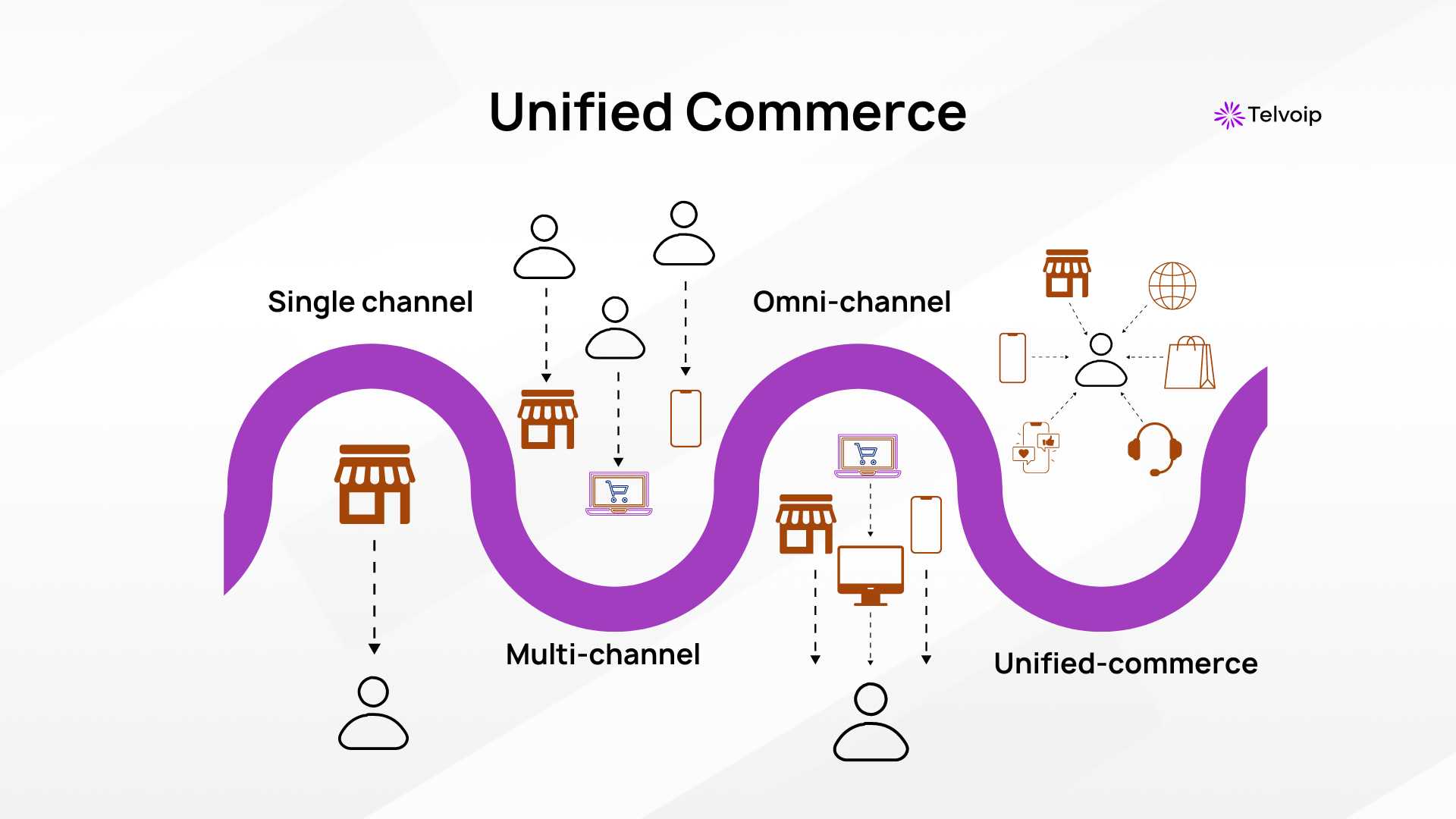
Unified commerce is a new approach to omnichannel marketing that combines all sales channels, customer interactions, and backend systems into a cohesive ecosystem. This system allows real-time data synchronization across various touchpoints, enabling businesses to deliver personalized experiences, optimize inventory management, and streamline operations. By integrating systems like ecommerce, point-of-sale, order management, and CRM, unified commerce empowers businesses to gain deeper customer insights, enhance operational efficiency, and drive growth in the face of evolving consumer expectations.
The Core Components of Unified Commerce
Centralized Data Management: Centralized data management is crucial for unified commerce, providing a single source of truth for customer and transaction data. This eliminates silos in traditional retail systems, enabling businesses to access real-time data on customer behaviors and preferences. This holistic view enhances decision-making, personalization of customer experiences, and quick response to market changes. It also ensures consistency in customer interactions, fostering loyalty and driving growth.
Seamless Customer Experience: Uniform commerce ensures a seamless customer experience across all channels, including online platforms, physical stores, and mobile applications. This unified interface allows customers to seamlessly transition between touchpoints, enhancing satisfaction, trust, and loyalty. It also allows businesses to gather valuable insights across channels, enabling continuous refinement of strategies and offerings. This continuous engagement drives long-term relationships with customers, fostering a seamless journey across all channels.
Inventory Optimization: Uniform commerce enhances inventory optimization by centralizing inventory management across all sales channels. This allows businesses to maintain real-time stock levels, making informed decisions about replenishment and allocation. This balances supply and demand, minimizing risks of overstocking and understocking. Moreover, this optimized inventory management ensures products are readily available to customers, enhancing operational efficiency, reducing waste, and improving customer satisfaction. This strategic alignment also positions businesses to respond agilely to market trends and consumer preferences, driving growth and profitability.
Advanced Analytics: Unified commerce platforms offer businesses advanced analytics capabilities to understand customer behavior, optimize operations, and drive growth. They consolidate data from various interactions into a centralized system, providing a comprehensive view of the customer journey. This data can be used to identify high-value customer segments, predict future demand, and personalize marketing campaigns. Advanced analytics tools like predictive modeling, sentiment analysis, and real-time reporting enable businesses to make informed decisions and deliver exceptional customer experiences.
The Difference Between Omnichannel and Unified Commerce
In Kenya, the shift towards unified commerce is gaining momentum as businesses aim to improve customer experiences and streamline operations. Omnichannel strategies, which involve multiple channels like online platforms and mobile applications, often result in inefficiencies and fragmented customer experiences. In contrast, unified commerce integrates these systems into a single platform, ensuring smooth operations and real-time visibility across all touchpoints.
This integration not only enhances operational efficiency but also facilitates a seamless shopping journey for customers. As Kenyan businesses increasingly adopt unified commerce, they are better positioned to meet the demands of a digital-first market, thereby boosting customer satisfaction and loyalty in a competitive market.
The Benefits of Unified Commerce for Kenyan Businesses
Enhanced Customer Satisfaction: Uniform commerce enhances customer satisfaction by providing a personalized experience across all touchpoints. By tracking customer interactions in real-time, businesses can gain insights into individual preferences and behaviors, allowing them to tailor their offerings. This personalization fosters a deeper emotional connection between the brand and the consumer, leading to increased loyalty, repeat business, and higher customer lifetime value. In essence, unified commerce transforms customer satisfaction into a meaningful relationship, driving long-term success.
Inventory Management: Real-time inventory management is a key feature of unified commerce, enabling businesses to maintain accurate stock levels across all channels. This integration of data reduces risks of overselling and stockouts. It also improves customer experience by ensuring reliable delivery times and efficient in-store pickup options. Real-time inventory insights enable businesses to make proactive decisions about restocking and inventory allocation, optimizing operations and reducing excess costs.
Improved Operational Efficiency: Uniform commerce consolidates all business operations into a single platform, reducing complexity and enhancing operational efficiency. This streamlines processes, eliminating the need for employees to switch between tools. It integrates functions like sales, inventory management, customer relationship management, and analytics, providing greater visibility and control. This enhances collaboration, facilitates quicker decision-making, and allows organizations to adapt to market changes and customer demands.
Data Driven Decision Making: Unified commerce leverages advanced analytics tools to enable data-driven decision making. This system allows businesses to understand customer behavior, sales trends, and operational performance. This data enables informed decisions, driving growth and profitability. It allows businesses to optimize strategies, allocate resources effectively, and predict future demand.
Omnichannel Integration: Unified commerce simplifies omnichannel strategies by consolidating all sales channels and customer touchpoints into a single, centralized platform. This simplifies the administrative burden and allows for efficient data management. This allows businesses to focus on delivering consistent, personalized experiences without technical challenges. The ease of implementation and management allows organizations to adapt quickly to evolving customer preferences and market demands, driving growth and success in a competitive landscape.
Scalability and Flexibility: Unified commerce platforms offer scalability and flexibility, making them ideal for businesses expanding and adapting to changing market conditions. They allow businesses to integrate new touchpoints without extensive reconfiguration or disruption. The flexibility allows businesses to quickly respond to evolving customer demands, enabling innovation and staying competitive. This enables businesses to scale operations efficiently while maintaining a consistent, high-quality customer experience, positioning them for long-term success.
Unified Commerce in Action
Kenyan retailers are embracing unified commerce to improve their operations and provide a seamless shopping experience for customers. This integration has improved customer satisfaction and driven sales growth by breaking down silos between e-commerce and physical stores. Small and medium enterprises (SMEs) in Kenya are also leveraging unified commerce to stay competitive by integrating their physical stores with e-commerce platforms and social media channels. This allows them to manage inventory, track customer preferences, and provide personalized recommendations, ultimately driving customer loyalty and revenue growth.
The hospitality sector is also embracing unified commerce to streamline operations and enhance guest experiences. Hotels are leveraging unified platforms to manage bookings, customer preferences, and in-room services through a single system. This integration enables hotels to offer a more personalized experience, catering to the specific needs and preferences of their guests. The adoption of unified commerce in the hospitality sector not only improves operational efficiency but also fosters guest satisfaction and loyalty, positioning Kenyan hotels as competitive players in the global tourism market.
Conclusion
Unified commerce is a business strategy that is transforming Kenya’s business landscape by integrating all aspects of a business into a single platform. This approach enhances customer satisfaction and operational efficiency by reducing discrepancies across various channels. As technology advances and consumer expectations shift towards more cohesive shopping experiences, unified commerce will become vital for businesses in Kenya’s dynamic market.
Telvoip is well-positioned to support businesses in this transition by integrating sales channels and customer interactions, ensuring a more efficient and personalized customer experience. This makes Telvoip an essential partner for businesses aiming to thrive in Kenya’s rapidly evolving market.